Seoul National University Hospital – Dongguk University Ilsan Hospital precisely diagnose the ‘maximum wear point’ of knee osteoarthritis using AI
-Achieves up to 97% diagnostic accuracy with the deep learning-based index ‘oJSW’… securing expert-level reliability
-Personalized automated detection technology… sensitively captures subtle structural deterioration of the joint over time
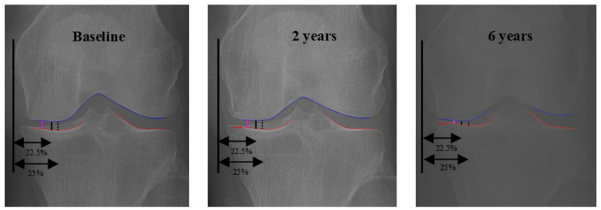
[Figure 1] Comparison of joint space measurements at baseline, 2 years, and 6 years.
AI-detected oJSW (purple) allows more precise longitudinal monitoring than conventional fixed-location measurements (black).
A technology has been developed that enables artificial intelligence (AI) to precisely identify the ‘most severely worn area’ of the knee joint—difficult to detect with conventional X-ray diagnosis—and accurately assess the severity and progression of osteoarthritis.
A joint research team led by Prof. Doo-Hyun Noh of the Department of Orthopedic Surgery at Seoul National University Hospital and Prof. Dowon Lee of Dongguk University Ilsan Hospital proposed a new imaging biomarker, ‘oJSW (orthogonal minimum joint space width),’ which accurately measures cartilage wear locations that differ for each patient using a deep learning algorithm. Through large-scale data, the team demonstrated that the accuracy and sensitivity of this index are statistically superior to conventional fixed-location measurement methods.
The severity of knee osteoarthritis is typically evaluated by measuring the joint space width (JSW) between the femur (thigh bone) and tibia (shin bone) on X-ray images. Conventionally, measurements were taken at fixed positions of the joint (JSW225, JSW250). However, this approach does not sufficiently reflect individual anatomical differences and asymmetric wear patterns, posing a risk of missing the areas with the most severe degeneration. In contrast, the newly developed oJSW automatically explores the joint using AI and measures the narrowest point orthogonally, thereby precisely reflecting patient-specific wear conditions.
The research team conducted a longitudinal analysis of 15,313 knee images from 3,855 participants over a maximum follow-up period of 72 months (6 years), using data from the Osteoarthritis Initiative (OAI), a large-scale cohort supported by the U.S. National Institutes of Health (NIH). This is the first study to validate a novel deep learning–based imaging biomarker against conventional standard metrics in a large-scale longitudinal cohort (tracking the same population over time).
The results showed that oJSW achieved high diagnostic accuracy (AUC 0.86–0.97) across all stages of osteoarthritis severity, from early to advanced stages. This consistently outperformed conventional methods (AUC 0.78–0.95) and indicates that the method can distinguish disease severity with up to 97% probability when randomly comparing patients and healthy individuals. This level of performance is comparable to the reliability of visual assessments by experienced experts.
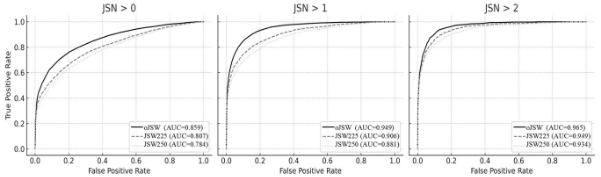
[Figure 2] Comparison of diagnostic accuracy. AI-based oJSW outperformed conventional fixed-location measurements across all osteoarthritis stages, from early (JSN > 0) to severe (JSN > 2), achieving AUC 0.86–0.97.
Additionally, in the analysis that tracks changes over 12 months to detect the degree of disease progression(rSRM), it also recorded high values of 0.91–0.97. This demonstrates that oJSW can more specifically and sensitively detect subtle structural deterioration of the knee over time compared to existing indices.
Prof. Doo-Hyun Noh (Department of Orthopedic Surgery, Seoul National University Hospital) stated, “oJSW will serve as a structural biomarker for assessing osteoarthritis severity and tracking disease progression. In particular, it is expected to be used as a sensitive evaluation tool in clinical trials of disease-modifying therapies that aim to slow disease progression, thereby contributing to new drug development.”
Prof. Dowon-Lee (Department of Orthopedic Surgery, Dongguk University Ilsan Hospital) added, “This study is meaningful in that it presents an objective and standardized diagnostic tool through fully automated analysis, and it is expected to be useful in real clinical practice in the future.”
Meanwhile, "The results of this study were published in the latest issue of 'KSSTA (Knee Surgery, Sports Traumatology, Arthroscopy),' the official journal of the European Society of Sports Traumatology, Knee Surgery and Arthroscopy."
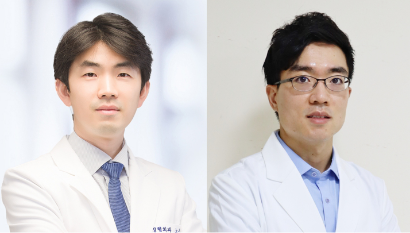
[Photo, from left] Prof. Roh Doo-Hyun (Orthopedic Surgery, Seoul National University Hospital), Prof. Lee Do-Won (Orthopedic Surgery, Dongguk University Ilsan Hospital)