Low-to-Intermediate Risk Hypertrophic Cardiomyopathy Patients Face about 6-Fold Higher Risk of Sudden Cardiac Death Events When Left Atrial Reservoir Strain (LARS) Is Below 21%
- Joint research team at Seoul National University Hospital tracks 1,761 patients for a median of 6.8 years; significant association remains consistent even in patients without atrial fibrillation.
- Incorporating LARS into the existing scoring system significantly improves 5-year event discrimination (AUC) in low-to-intermediate risk patients from 0.63 to 0.73.
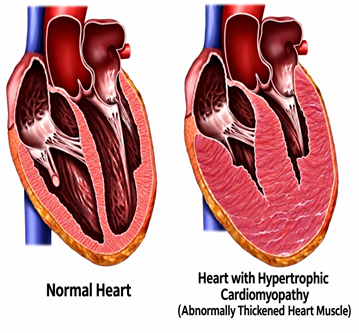
[Figure1] Schematic diagram of Hypertrophic Cardiomyopathy (HCM) mechanics
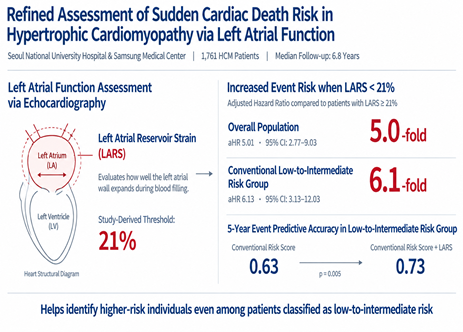
[Figure2] Risk of SCD-related events in patients with LARS <21% (vs. ≥21%) and the improvement in 5-year risk discrimination (AUC) in low-to-intermediate risk patients.
A joint research team led by Professors Kim Hyung-kwan and Kwak Soon-gu from the Division of Cardiology at Seoul National University Hospital (SNUH) confirmed that hypertrophic cardiomyopathy (HCM) patients classified as ‘low-to-intermediate risk’ by the current risk scoring system face a roughly 6-fold higher risk of sudden cardiac death (SCD)-related events if their echocardiographically measured left atrial reservoir strain (LARS) is below 21%, compared to those with LARS of 21% or higher. The 21% threshold was identified using an explainable machine learning approach.
Hypertrophic cardiomyopathy is a condition in which the heart muscle thickens abnormally, primarily due to genetic factors. Clinical presentation and disease progression vary widely among patients; in some, life-threatening ventricular arrhythmias lead to cardiac arrest or sudden death. This underscores the critical importance of identifying high-risk patients early to institute primary prevention strategies, such as implantable cardioverter-defibrillator (ICD) placement.
Currently, the European Society of Cardiology risk score (HCM Risk-SCD) estimates 5-year SCD risk by integrating variables including age, maximum left ventricular wall thickness, left atrial size, history of syncope/arrhythmias, and family history of SCD. However, SCD-related events are not uncommon even among patients classified as low-to-intermediate risk (5-year estimated risk <6%) by this system, highlighting the need for refined risk markers.
The research team focused on left atrial mechanics. The left atrium functions as a reservoir that receives oxygenated blood from the lungs and delivers it to the left ventricle. Left atrial reservoir strain (LARS) quantifies the compliance and stretching capability of the left atrial wall during the reservoir phase using speckle-tracking echocardiography, with lower values reflecting impaired LA reservoir function. The team investigated whether this parameter could complement existing risk stratification scores. Given adequate image quality and analysis infrastructure, LARS can be readily derived from standard clinical echocardiograms by applying dedicated postprocessing software.
This retrospective multicenter cohort study analyzed 1,761 adult patients with HCM diagnosed at Seoul National University Hospital (2007–2023) and Samsung Medical Center (2007–2017), followed for a median of 6.8 years. Professor Lee Sang-Chol Lee (Samsung Medical Center) and Kang Young-hyun (Medtronic Korea) co-authored the study.
The research team defined ‘SCD-related events’ as sudden cardiac death, aborted sudden cardiac death, or appropriate ICD shocks delivered to terminate life-threatening ventricular arrhythmias. Using an explainable machine learning framework (LightGBM with SHAP analysis), the researchers identified key variables contributing to event prediction along with a clinically relevant threshold. They then evaluated the association between LARS and SCD-related events using survival analysis and multivariable Cox regression models that accounted for other clinical risk factors.
Among the 10 selected candidate variables, LARS emerged as the single most influential predictor of SCD-related events, with model-predicted risk increasing markedly when LARS fell below approximately 21%. Over the follow-up, SCD-related events occurred in 69 patients (3.9%). Across the entire cohort, patients with LARS <21% exhibited a roughly 5-fold higher risk of SCD-related events compared to those with LARS ≥21% (adjusted hazard ratio [aHR]: 5.01), after adjusting for the HCM Risk-SCD score, left ventricular ejection fraction, and left ventricular apical aneurysm. This significant association remained robust in subgroup analyses excluding patients with atrial fibrillation (n=1,445) as well as in the cardiac MRI subcohort (n=887) after additional adjustment reflecting myocardial fibrosis.
Specifically among low-to-intermediate risk patients, LARS <21% was associated with a 6-fold higher risk of SCD-related events compared to those with LARS ≥21% (aHR: 6.13). Conversely, no statistically significant risk difference was observed between the original low-risk and intermediate-risk subgroups. Adding ‘LARS <21%’ to the conventional HCM Risk-SCD score significantly improved 5-year event discrimination (AUC) in the low-to-intermediate risk group from 0.63 to 0.73 (P=0.005).
The authors noted that as an observational retrospective analysis, the study does not verify whether LARS-guided therapeutic intervention directly reduces mortality, and the 21% threshold requires prospective validation across independent cohorts before being established as a formal clinical cutoff.
“Even among HCM patients categorized as low-to-intermediate risk under traditional frameworks, individual risk profiles are far from uniform. This study demonstrates that evaluating left atrial deformation via echocardiography allows for a much finer risk stratification for sudden cardiac death in this population”, said Professor Kwak Soon-gu.
“Accurately identifying high-risk individuals to establish timely preventive measures is paramount in managing HCM. We anticipate that integrating LARS assessment alongside conventional risk factors will substantially aid clinicians in pinpointing patients who require closer monitoring or preventive ICD therapy”, stated professor Kim Hyung-kwan.
The study was published in the recent issue of the ‘Journal of the American Society of Echocardiography (JASE, IF 8.3)’.

[From left] Professor Kim Hyung-kwan and Professor Kwak Soon-gu, Division of Cardiology, Seoul National University Hospital