New 4-Stage Left Atrial Staging System Identified to Predict Atrial Fibrillation Risk in Hypertrophic Cardiomyopathy
- Stage 4 patients face up to a 7.4-fold higher risk of new-onset atrial fibrillation compared to Stage 1, categorized by integrating left atrial pressure and contractile function.
- 10-year cumulative incidence of atrial fibrillation escalates from 4.8% in Stage 1 to 49.1% in Stage 4, with robust reproducibility in an independent external validation cohort.
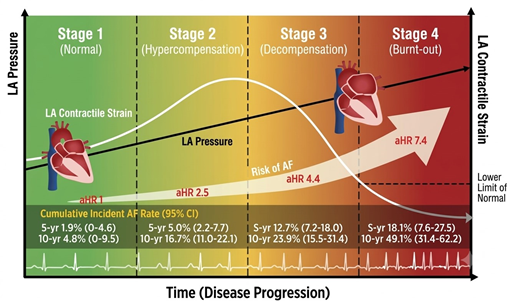
[Figure 1] Schematic diagram of left atrial pathophysiology in patients with hypertrophic cardiomyopathy
The underlying left atrial pathophysiology in patients with hypertrophic cardiomyopathy (HCM)—an inherited myocardial disease affecting 1 in 200 to 500 adults—has been newly elucidated. A key feature of this study is the novel LA staging system (Stages 1 to 4), which integrates echocardiographic measures of LA pressure (hemodynamic load) and LA contractile function (intrinsic LA mechanics). Notably, patients in Stage 4, who faced the highest risk, exhibited up to a 7.4-fold higher risk of new-onset atrial fibrillation (NOAF) compared to those in Stage 1. These findings are expected to serve as a pivotal framework for tailoring AF surveillance strategies in patients with HCM.
A joint research team led by Professors Lim Jae-hyun and Kim Hyung-wan from the Division of Cardiology at Seoul National University Hospital (SNUH), together with Professor Hwang In-chang from Seoul National University Bundang Hospital (SNUBH) and Professor Lee Sang-chol from Samsung Medical Center (SMC), announced on the 28th the results of a multicenter longitudinal study following 705 HCM patients (SNUH and SMC cohorts, mean age 57.6 years) for about 7.5 years from 2007 to 2024. The study proposed a 4-stage LA staging framework and analyzed the subsequent risk of NOAF.
HCM is characterized by left ventricular (LV) hypertrophy, hypercontractility, and diastolic dysfunction. As LV diastolic dysfunction progresses, LA pressure rises, leading to adverse LA remodeling—such as chamber enlargement and fibrosis—which eventually triggers AF. AF is the most common sustained arrhythmia in HCM and acts as an independent driver of stroke and death. Indeed, in this study cohort, NOAF occurred in 14.3% (101 patients) during the follow-up period.
Although contemporary guidelines recommend annual or biennial AF surveillance using electrocardiography (ECG) or Holter monitoring for high-risk patients, effective risk stratification has remained elusive. Conventional LA size is a relatively late and static marker representing the cumulative outcome of longstanding hemodynamic load, failing to fully characterize how the LA dynamically adapts and eventually decompensates under escalating pressure.
To address this, the research team integrated LA contractile strain (intrinsic LA function) with echocardiographic indicators of LA pressure (hemodynamic load) to categorize the mechanical and hemodynamic states of the LA into distinct stages.
The staging system proposed by the research team is classified as follows: Stage 1 (Normal): A stage where both left atrial pressure and contractile function are normal. Stage 2 (Hypercompensation): A stage where left atrial contractile function is relatively enhanced to counteract rising left atrial pressure. Stage 3 (Decompensation/Functional decline): A stage where pressure remains high, but contractile enhancement disappears and the left atrium begins to enlarge. Stage 4 (Exhaustion/Burnt-out): A stage where pressure is high and contractile function falls below the lower limit of normal. Separately, an ‘isolated left atrial contractile dysfunction’ group was also identified, characterized by impaired contractile function despite normal left atrial pressure.
Among the entire cohort, 18.6% of patients were classified into Stage 1, 40.6% into Stage 2, 25.7% into Stage 3, and 10.9% into Stage 4. The staging system showed a significant, stepwise increase in the risk of NOAF per stage increment (adjusted hazard ratio [aHR]: 1.83; 95% confidence interval [CI]: 1.42–2.37).
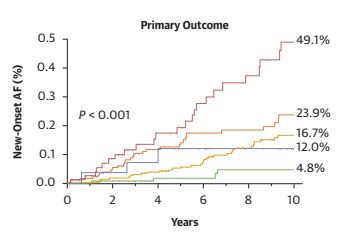
[Figure 2] Risk of incident atrial fibrillation according to left atrial stages (Kaplan-Meier curves)
The 10-year cumulative incidence of NOAF markedly escalated with advancing stages: 4.8% in Stage 1, 16.7% in Stage 2, 23.9% in Stage 3, and 49.1% in Stage 4. Adding this LA staging framework to established clinical risk models (CHARGE-AF and HCM-AF scores) provided significant incremental predictive value for 10-year NOAF.
These findings were consistently reproduced in an external validation cohort. An independent analysis of 425 HCM patients (mean age 59.7 years) at SNUBH confirmed a 1.82-fold increase in NOAF risk per stage advance, demonstrating excellent consistency across cohorts.
Furthermore, the risk of incident ischemic stroke—a major complication of AF in HCM—also increased stepwise by 1.81-fold per stage increment (aHR: 1.81; 95% CI: 1.13–2.95). Notably, the annual stroke incidence in patients with Stages 3 to 4 reached approximately 1%.
In an additional analysis of 217 patients with follow-up echocardiography available 4 to 6 years after the baseline evaluation, the research team demonstrated that the vast majority of patients either maintained their initial stage or progressed to higher stages. 39.6% remained in the same stage, while 43.8% progressed to higher stages or developed atrial fibrillation. These findings support that left atrial stage progression occurs sequentially in the proposed order.
The research team explained that because the risk of atrial fibrillation differs distinctly across stages, this framework is expected to serve as a foundation for establishing risk-stratified, tailored surveillance strategies. Specifically, monitoring intensity could be de-escalated for low-risk patients such as those in Stage 1, while more frequent and intensive monitoring can be applied to high-risk patients such as those in Stage 4.
Professor Lim Jae-hyun (Division of Cardiology, SNUH) said, “This study illustrates the 4-stage mechanical cascade of how the left atrium adapts to rising hemodynamic pressure and eventually reaches its physiological limits. We plan to leverage these insights to identify optimal therapeutic windows at each stage to slow disease progression and develop tailored clinical strategies for the early prevention of atrial fibrillation and stroke in high-risk patients.”
Professor Kim Hyung-kwan (Division of Cardiology, SNUH) noted, “The left atrium was regarded as a passive barometer merely reflecting left ventricular function. However, our study demonstrates that it is an active organ capable of dynamic adaptation and eventual functional exhaustion. Given that this staging system provided consistent predictive value across two independent cohorts, we are exploring ways to seamlessly integrate this staging framework into routine clinical echocardiographic reporting.”
Meanwhile, the findings of this study have been published online in the latest issue of the ‘Journal of the American College of Cardiology (JACC, Impact Factor 22.3)’, the flagship journal of the American College of Cardiology.

[Photo from left] Professors Lim Jae-hyun and Kim Hyung-kwan (Seoul National University Hospital), Professor Hwang In-chang (Seoul National University Bundang Hospital), and Professor Lee Sang-chol (Samsung Medical Center)