Pre-existing Allergic or Upper-Airway Conditions Increase Risk of New-Onset Asthma Following COVID-19
- Joint research team from SNUH, - Elevated risks across all individual conditions... Allergic Rhinitis (1.75-fold), Atopic Dermatitis (1.84-fold), and Chronic Rhinosinusitis (2.04-fold)
- Stepwise risk increase: Greater number of pre-existing allergic and upper-airway conditions correlates with a higher risk of incident asthma
A study reveals that COVID-19 survivors with a history of pre-existing allergic or upper-airway conditions face a 66% higher risk of being newly diagnosed with asthma compared to those without such history.
Long-term respiratory sequelae following SARS-CoV-2 infection—including persistent symptoms and new-onset asthma diagnoses—have been increasingly reported. While allergic diseases, upper-airway inflammatory conditions, and asthma share key immunological and inflammatory mechanisms, the specific conditions linked to post-COVID asthma and how multi-disease burden influences overall risk have remained unclear.
On August 13, a joint research team—led by Research Professor Choi You-jung and Clinical Assistant Professor Kim Young-chan from Seoul National University Hospital (SNUH), alongside Professor Lee Hye-sung from Kangwon National University College of Medicine—announced results from a retrospective cohort study using linked nationwide data from the Korea Disease Control and Prevention Agency and the National Health Insurance Service (2019–2022).
The team identified approximately 3.98 million COVID-19 patients without a prior history of asthma and categorized them into an exposed group (those with pre-existing allergic rhinitis, chronic rhinosinusitis, atopic dermatitis, or food allergy) and a control group. Using 1:1 propensity score matching to adjust for age, sex, region, income level, comorbidities, and baseline medication use, each group was balanced to approximately 1.56 million individuals. Incident asthma was defined by the co-occurrence of diagnostic codes and asthma-specific prescriptions during follow-up.
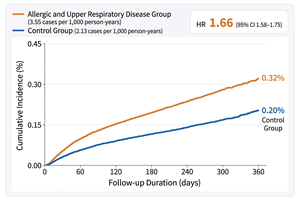
[Figure 1] Cumulative incidence of incident asthma following COVID-19 infection
During follow-up, 3,808 incident asthma cases were identified in the pre-existing disease group compared to 2,300 cases in the control group. The incidence rates were 3.55 and 2.13 per 1,000 person-years, respectively. The hazard ratio (HR) was 1.66, indicating a 66% higher risk of new-onset asthma among individuals with a pre-existing allergic or upper-airway condition.
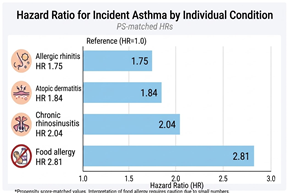
[Figure 2] Hazard ratios for incident asthma diagnosis by specific pre-existing disease
In the disease-specific analysis, all four conditions were associated with an increased risk of incident asthma diagnosis. The hazard ratios were 1.75 for allergic rhinitis, 1.84 for atopic dermatitis, 2.04 for chronic rhinosinusitis, and 2.81 for food allergy. However, caution is required in interpreting the results for the food allergy group due to the small number of incident cases (22 cases) and the wide confidence interval.
Furthermore, post-COVID asthma risk increased stepwise with greater disease burden. Individuals with a single pre-existing condition had an HR of 1.58, whereas those with two or more conditions exhibited an HR of 2.44. Additionally, using pre-index systemic corticosteroid use as a proxy for disease severity, individuals with above-average corticosteroid consumption had an HR of 1.96 relative to controls, compared to 1.53 for those at or below the mean. The researchers noted that this reflects underlying disease activity and severity rather than a direct pharmacological effect of corticosteroids alone.
The research team highlighted that pre-existing allergic or upper-airway conditions can serve as key clinical clues for identifying high-risk individuals susceptible to new-onset asthma following COVID-19. However, as an observational study, direct causality cannot be definitively concluded. To account for potential detection bias due to higher healthcare utilization among patients with allergic conditions, the team performed a sensitivity analysis incorporating baseline healthcare visits into the matching process. Even after this adjustment, the association remained significant with an HR of 1.37.
"Using nationwide population-based data, we confirmed that all four allergic and upper-airway conditions are associated with an increased risk of post-COVID incident asthma, with a stepwise rise in risk corresponding to higher disease burden. Future studies incorporating immunological biomarkers will be necessary to achieve more precise risk stratification." said Research Professor Choi You-jung (Biomedical Research Institute at SNUH).
"In patients presenting with persistent cough or dyspnea following COVID-19, clinicians should evaluate their pre-infection history of allergic or upper-airway diseases. In particular, for patients with multiple co-existing conditions whose symptoms persist, diagnostic workups such as pulmonary function testing should be considered to evaluate asthma." added Clinical Assistant Professor Kim Young-chan (Department of Allergy and Clinical Immunology at SNUH).
This study was supported by grants from the Ministry of Food and Drug Safety and the Ministry of Health and Welfare / Korea Health Industry Development Institute. The findings are published online in the international journal Nature Communications (IF 18.1).

[Photo from Left] Choi You-jung(Research Professor, Biomedical Research Institute, SNUH), Kim Young-chan(Clinical Assistant Professor, Department of Allergy and Clinical Immunology at SNUH), Lee Hye-sung(Professor, Department of Medical Informatics, Kangwon National University College of Medicine).