Seoul National University Hospital and Sungkyunkwan University Identify Glioblastoma Treatment Response Based on Immune Cell Entry Order
- Microglia Entry First → STAT3 Activation → Suppression of NK Cell Infiltration → Suppression of Anti-Tumor Immunity
- NK Cell Entry First → Promotion of Anti-Tumor Gene Expression → Activation of Anti-Tumor Immunity
- Identification of the Key Immune Mediator IL12A... Suggesting Therapeutic Potential via STAT3 Inhibitor Combination Therapy
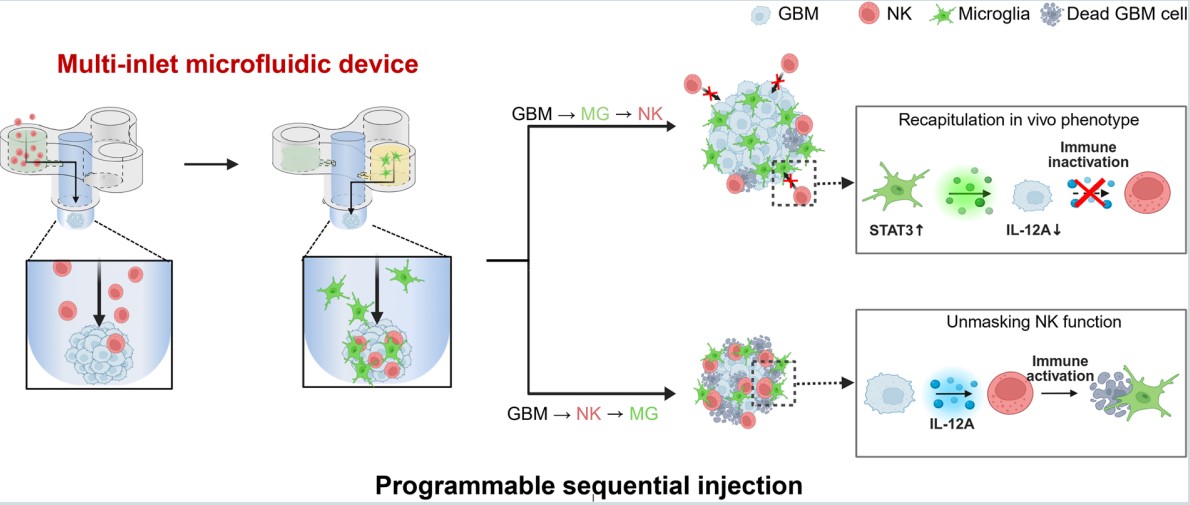
[Figure] Control of immune cell injection sequence using the multi-inlet microfluidic platform. Early microglial entry recreates an in vivo-like 'immunosuppressive' milieu, whereas early NK cell entry restores IL12A secretion and drives 'anti-cancer immune activation.'
A South Korean research team has shown that the anti-tumor immune response in glioblastoma, a refractory brain tumor, differs substantially depending on the temporal order in which immune cells reach the tumor. By recapitulating actual patient survival outcomes in an in vitro model, the team has provided a key clue for establishing personalized immunotherapy strategies.
The research team, led by Professor Sun-Ha Paek (Dr. Yona Kim) of the Department of Neurosurgery at Seoul National University Hospital and Professor Sung-Su Park (Dr. Seok-Gyu Han) of the School of Mechanical Engineering at Sungkyunkwan University, announced on the July 30th that it had confirmed these findings using an order-controllable microfluidic platform by analyzing the interactions among GBM cells, microglia, and natural killer (NK) cells within glioblastoma.
Glioblastoma is a malignant tumor of the central nervous system. Tumor-associated macrophages (TAMs)—composed of microglia, the brain's representative resident immune cells, together with blood-derived monocyte-derived macrophages—account for approximately 30–50% of the tumor mass. Microglia in particular create a potent immunosuppressive microenvironment around cancer cells, restraining the attack of anti-tumor immune cells such as NK cells. However, conventional culture methods suffer from instability during extended culture and lack the ability to control the order in which cells enter, making it difficult to replicate the dynamic interactions that actually occur in the brain.
The team built a "programmable multi-inlet microfluidic platform" capable of introducing immune cells in any desired order, and used it to form three-dimensional artificial glioblastoma tissue (spheroids) approximately 400 μm in diameter. Keeping the composition ratio of GBM cells, microglia, and NK cells identical, the researchers varied only the order in which the three cell types reached the tumor and compared the resulting responses.
The results showed that the cell type arriving first determined the overall direction of the immune response. When microglia arrived first (MG-first), the tumor-protective STAT3 signaling pathway was activated, blocking NK cell infiltration. Conversely, when NK cells arrived first (NK-first), genes driving cytotoxic, anti-tumor activity were strongly induced, producing a pronounced anti-tumor effect. These opposing outcomes were consistent with actual clinical courses in patients: comparing glioblastoma cells from a patient who survived more than 10 years with those from a short-term survivor, tumor cells from the short-term survivor proliferated more upon encountering microglia and were more resistant to NK cell attack.
Through transcriptomic analysis, the team also confirmed that IL12A—a key immune mediator that improves survival—was selectively increased when NK cells entered first. Analysis of 27 patients and roughly 338,000 cells showed that IL12A was so strongly suppressed within the glioblastoma microenvironment that it was detected in only 2 of the 27 patients (7.4%) and in just 0.45% of all cells. Analysis of large-scale glioblastoma patient databases likewise showed that patients with higher IL12A expression had significantly longer survival, identifying this factor as a key driver in converting tumors to an immune-active state.
The team also tested combining the STAT3 inhibitor WP1066—a targeted agent that blocks the tumor-protective signal—with temozolomide, the standard chemotherapy for brain tumors. This treatment restored the IL12A expression and IL-12p35 secretion that had been suppressed by microglia, allowing NK cells to infiltrate deeper into the tumor core and significantly increasing cancer cell death.
Professor Sun-Ha Paek (Department of Neurosurgery, Seoul National University Hospital) said, "This study demonstrates that the immune environment of glioblastoma is not fixed, but changes dynamically depending on the order in which cancer cells and immune cells meet." He added, "This platform, which can recapitulate patient prognosis, will be an important breakthrough for predicting treatment response in advance and establishing personalized immunotherapy strategies for patients with refractory brain tumors."
Meanwhile, this research was supported by the Ministry of Science and ICT and the National Research Foundation of Korea (NRF), and the findings were published in the latest issue of Neuro-Oncology (IF 13.1), an international journal in the field of oncology and neuro-oncology.
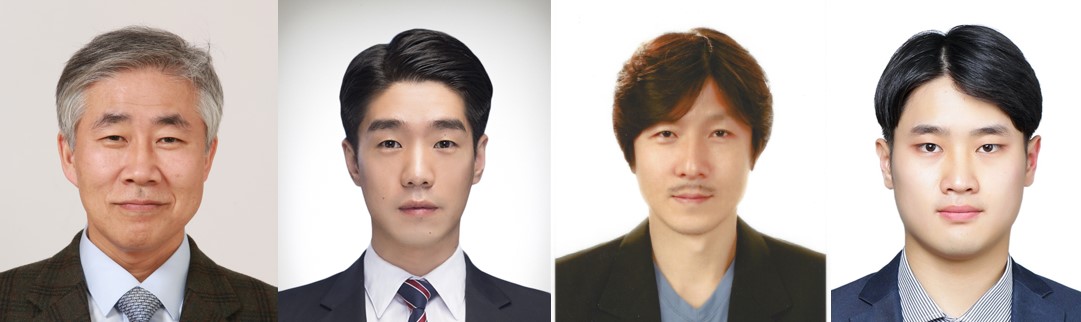
[Photo from left] Professor Sun-Ha Paek·Dr.Yona Kim from the Department of Neurosurgery at Seoul National University Hospital and Professor Sung-Su Park ·Dr. Seok-Gyu Han from the Department of Mechanical Engineering at Sungkyunkwan University